Boots / UX leadership · Design sprint
Making pharmacy order tracking clearer.
I led a five-day sprint to explore how pharmacy customers could understand the status of an order and know what to do next. We tested a mobile-first prototype with five customers and produced priorities for a phased delivery plan.
- My role
- UX Lead
- Context
- Boots
- Timeframe
- Five-day sprint
- Collaboration
- Two researchers and one UX Designer, alongside Simba
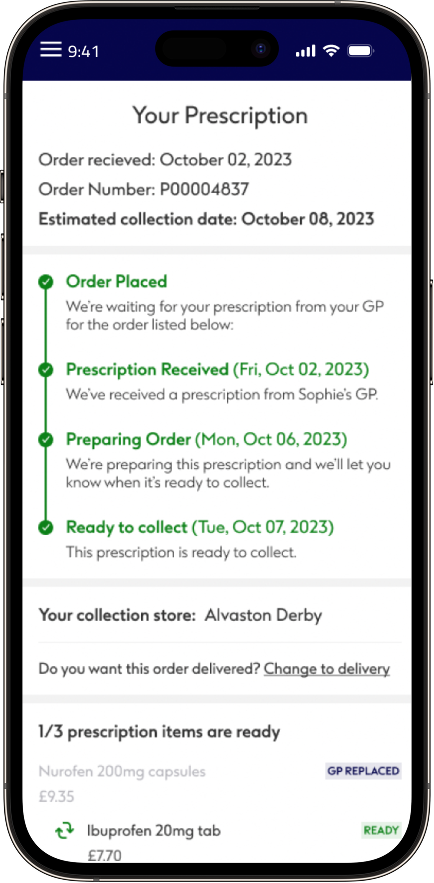
The outcome in brief
A tested prototype and a phased delivery recommendation.
The challenge.
A pharmacy order does not follow one simple path. Prescription processing, unavailable items, delays and split fulfilment can change what a customer receives and when. Our tracker needed to explain that service clearly from purchase to collection or delivery, including the moments when customers needed help.
I led a five-day, remote-friendly sprint with two researchers and a UX Designer, collaborating in Figma and FigJam. We aimed to test a direction quickly and give stakeholders a phased delivery plan. Reduced uncertainty and fewer support contacts were goals; the sprint would produce a prototype, customer feedback and prioritised recommendations.
Scope: Five-day design sprint for pharmacy order tracking, from purchase through fulfilment, collection or delivery.
My contribution.
- Resourced and planned the sprint, aligned stakeholders and facilitated the team through each day.
- Facilitated interviews and mapping, prioritised questions and kept the prototype scope focused.
- Coached sketching, facilitated decisions and wrote initial status, error and resolution copy.
- Led prototyping and synthesis, checked accessibility basics and converted findings into phased recommendations.
Five days, from service map to customer feedback.
Day 1 / Understand
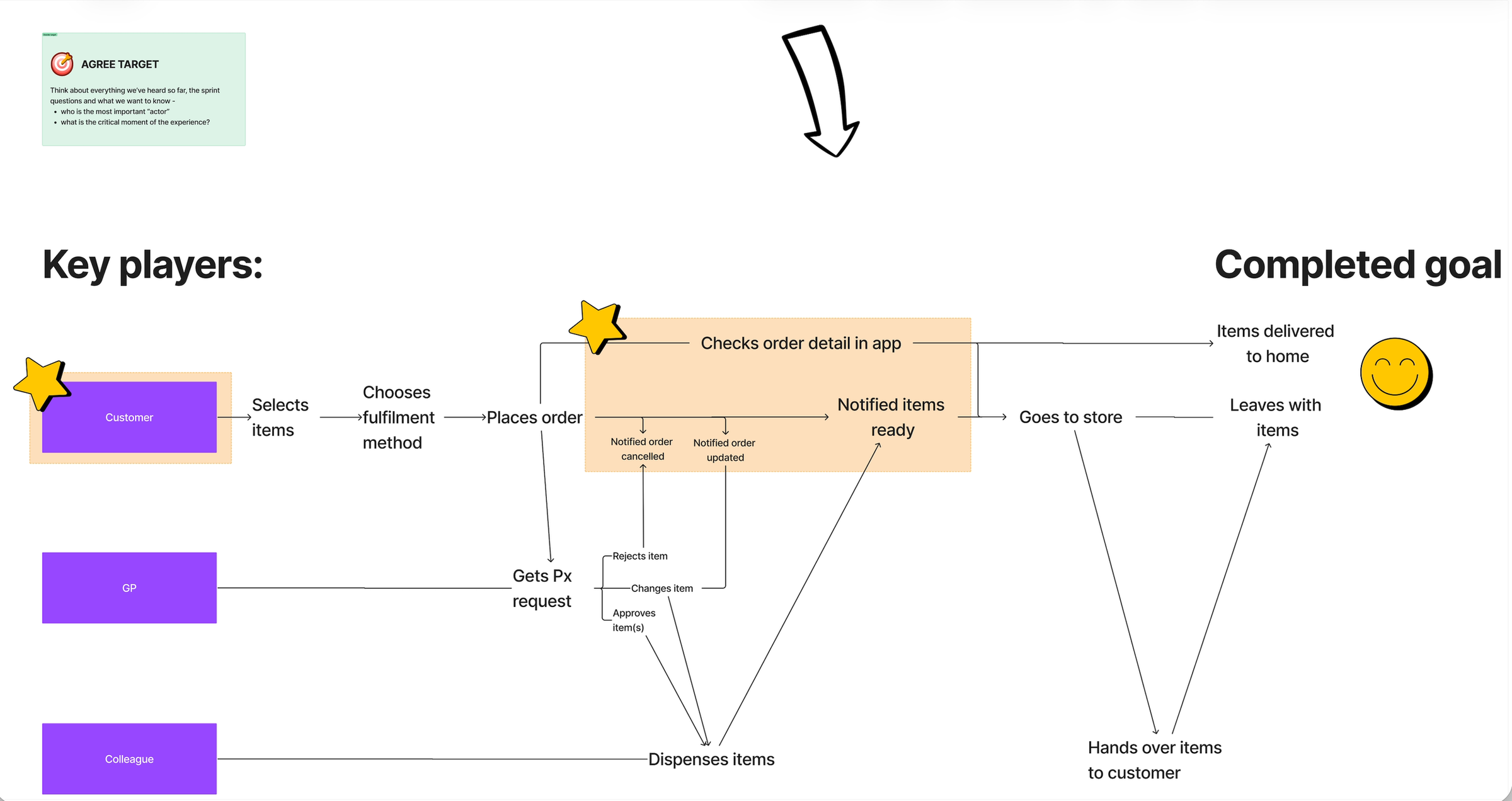
Map the journey behind the screen
I facilitated expert interviews with operations, pharmacy and support to understand constraints, policies and edge cases. We mapped Order → Payment/Auth → Fulfilment → Status updates → Pickup/Delivery → Help. How Might We clusters helped select a target slice: status tracking and notifications for in-flight orders. Our risks and assumptions included unclear status language, split orders and compliance messaging.
Day 2 / Explore
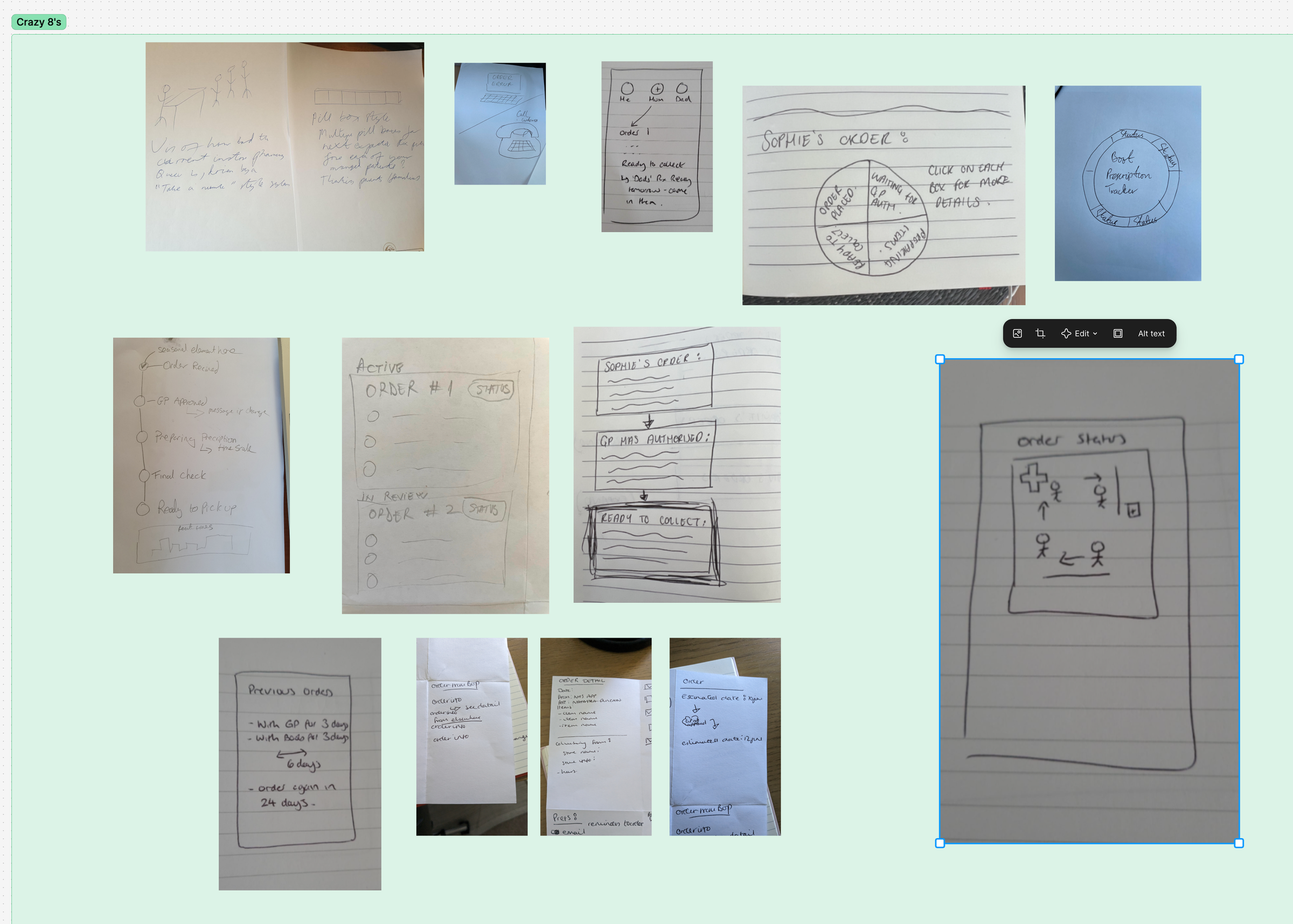
Sketch different ways to explain progress
Lightning demos of retail and logistics patterns led into Crazy 8s. We developed three to five concept sketches, annotated with copy, triggers and data states, then shortlisted three to four directions. These included a timeline, proactive alerts, an escalation path and store handoff QR codes. Our hypothesis was that one timeline with plain-English statuses would improve control and reduce support contacts.
Day 3 / Decide
Build a story around the difficult moments
I helped combine the strongest elements using impact and effort, then drafted status, error and resolution copy for an eight-to-ten-frame storyboard. It covered overview, timeline, delay, split order, notifications, handoff and help. We defined states including ordered, ready for fulfilment, delayed, partial fulfilment, ready to collect or deliver, and issue flagged. The outputs included a signed-off storyboard, state checklist and test-script outline.
Day 4 / Prototype
Make the concept testable on mobile
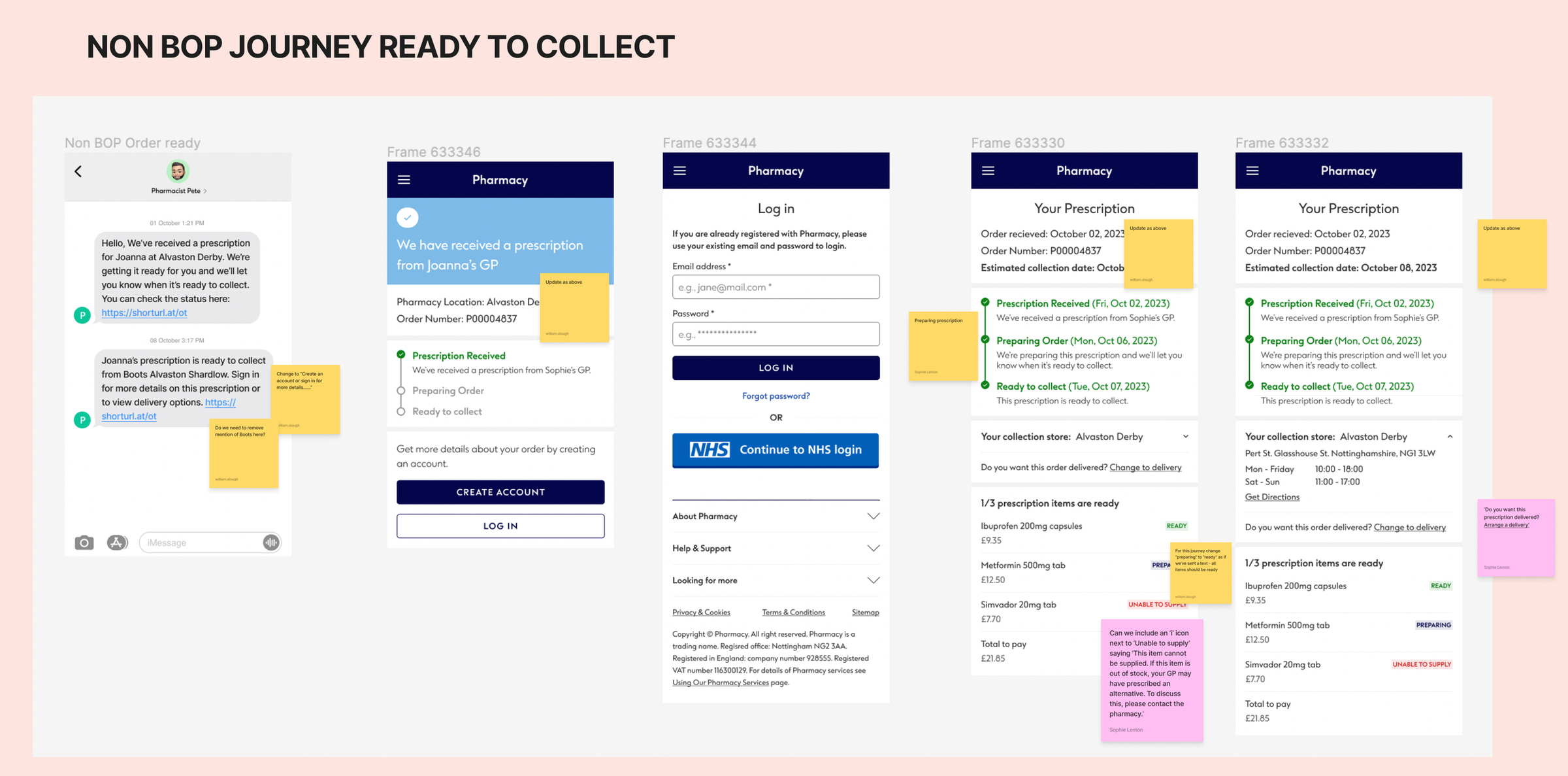
I co-designed a mobile-first Figma prototype at mid-to-high fidelity, with responsive considerations and variants for the happy path, delays and split fulfilment. I checked contrast and semantic structure, then rehearsed the walkthrough with the team. The researchers recruited five target customers and prepared the screener, consent, script, tasks, success criteria and note-taking templates.
Day 5 / Test
Check clarity and turn findings into priorities
The researchers ran five moderated sessions, with live notes covering task success, time, confidence and participant comments. The five tasks were to find an order's status, interpret a delay, manage notifications, handle split fulfilment and get help. I drove affinity synthesis and severity/impact prioritisation, then framed the stakeholder playback and phased recommendations.
Customer insights and the recommendations they shaped.
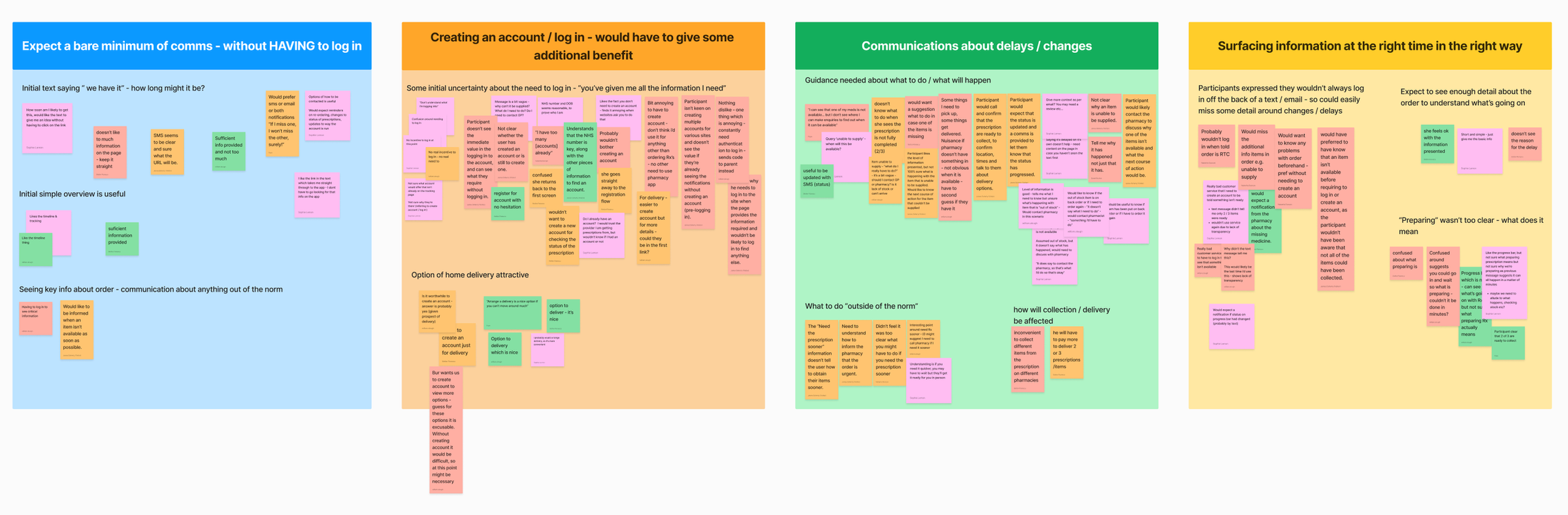
- FindingParticipants responded positively to the tracker, its simple layout and the ability to reach it through an SMS link.
- ResponseWe retained the timeline direction and focused revisions on status copy, hierarchy and the information surrounding it.
- FindingUnavailable items, delivery costs and what to do next were not clear enough upfront.
- ResponseWe recommended making reasons, costs and next steps more explicit, with estimates where reliable data was available.
- FindingCustomers resisted being asked to log in to access essential tracking information.
- ResponseThis raised a question for the next iteration: how could customers reach essential order information more easily, building on the positive response to SMS links?
- FindingPrescription statuses needed clearer explanation, including when the customer should contact their GP. Customers wanted proactive messages when problems arose.
- ResponseWe recommended more specific status language, clearer routes for help and proactive SMS or email updates about problems.
- FindingParticipants valued delivery and collection choices, but needed to understand how split fulfilment affected logistics and costs.
- ResponseWe recommended explaining what would arrive or be collected separately, with clearer fulfilment information and associated costs.
The decisions that mattered.
Make the first release achievable
The proposed MVP focused on an order overview, a timeline and basic notifications. This gave delivery a defined starting point while allowing the clearer copy and information hierarchy from testing to shape the next iteration.
Keep estimates tied to dependable data
Customers needed to understand delays and next steps. Our recommendation was to show reasons and estimated times where the service could provide reliable information, rather than making a promise the tracker could not support.
Phase the more complex handoff
Store handoff was proposed for a later phase. Separating it from the initial overview, timeline and notifications kept the recommendation clear about what an early release would cover and what still needed further work.
What changed.
Participants responded positively to the tracker, simple layout and SMS links. Testing also exposed missing information about unavailable items, delivery costs and next steps, resistance to logging in for essential tracking, and a need for clearer prescription statuses and proactive updates. The sprint produced a tested prototype, specific revisions and delivery recommendations.
The sprint gave stakeholders a tested direction and specific changes to take into delivery. It also identified what would need evaluation after launch: support contact rate, NPS or CSAT, and how quickly and successfully customers could understand their order. These were proposed measures, not reported improvements from the prototype.
What the evidence can tell us
The published evidence does not confirm a live launch or a reduction in support contacts. Task success, time and confidence were captured during testing, but numerical results are not published. Reduced uncertainty and fewer support contacts remain goals for post-launch measurement.
What I learned.
A useful tracker needs dependable information about the service behind it. Usability testing helped identify where clarity broke down; support contact rates, customer satisfaction and time to understand an order would help assess the experience after launch.
The five tasks exposed gaps that a successful walk through the main timeline could have missed. Testing delays, prescriptions, split orders and help made the recommendations more useful for the real pharmacy journey.